Choosing the right website package can make or break a startup’s early growth, especially when so many “affordable” options fail to deliver real value. Many founders focus on low prices, only to end up with websites that lack scalability, branding impact, or the essential features needed to attract customers and generate revenue.
This guide reveals the insider framework used by top startup teams to evaluate website packages with clarity and confidence. You’ll learn how to compare must-have features versus unnecessary add-ons, uncover hidden costs, and select solutions that align with your business model, budget, and long-term growth goals.
Drawing from hands-on experience building and launching high-performing startup websites, this resource helps you make smarter decisions—ensuring your first site not only saves money but also establishes credibility, supports your brand extension strategy, and fuels sustainable growth from day one.
Quick Answers
What are small business website packages?
Small business website packages are bundled services that include design, hosting, CMS, and often basic SEO. They provide startups with a ready-to-launch website while balancing affordability and essential features.
Top Takeaways
- Affordable ≠ Basic
- Choose packages that balance cost with essential features and growth potential.
- Your Website is Your First Impression
- It builds credibility, generates leads, and supports long-term growth.
- Compare Wisely
- Use real examples, checklists, and trial periods to make informed choices.
- Prioritize Scalability
- Pick a package that can grow with your business without costly rework.
- Leverage Data & Insights
Use authoritative statistics and first-hand experience to guide decisions.
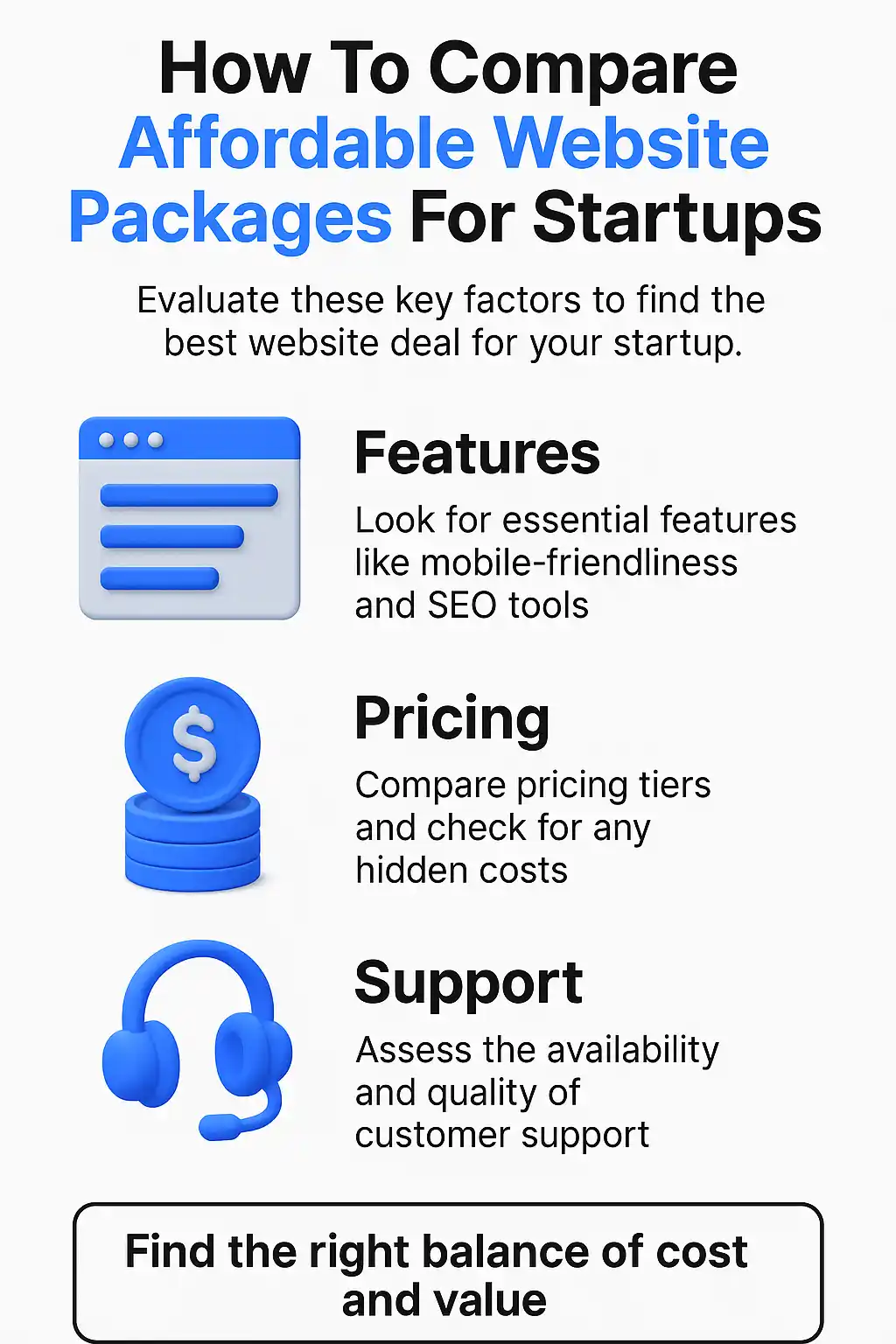
When evaluating website packages for your startup, it’s easy to get overwhelmed by pricing tiers, feature lists, and marketing promises. The key is knowing what truly matters for your business stage. Based on our experience at Branded Agency, here’s what to consider:
- Mobile-friendly, responsive design
- Fast-loading pages and basic SEO setup
- Easy content management for updates
- Branding elements that reflect your startup’s identityExtras like advanced analytics or premium integrations can be added later as your business grows.
- Setup or migration fees
- Add-ons for email, hosting, or SSL certificates
Renewal rates that differ from introductory pricing
- Can the site expand as traffic increases?
- Is customer support responsive and reliable?
Are there options to upgrade without rebuilding?
- Create a checklist of must-have vs. nice-to-have features
- Request demos or trial periods
Read reviews and case studies to understand actual client experiences
By focusing on these factors, you’ll avoid common pitfalls and select a package that’s affordable, functional, and growth-ready—giving your startup a professional online presence with strong creative design without compromising long-term strategy.
“From building websites for dozens of startups, we’ve learned that affordability doesn’t mean cutting corners. The best packages balance cost with features that actually drive growth—scalability, branding, and ease of use. Choosing wisely at this stage can save time, money, and headaches down the road.”
Essential Resources to Compare Small Business Website Packages
Choosing the right website package for your startup can feel overwhelming. From hidden fees to confusing feature lists, the options are endless. At Branded Agency, we’ve worked with dozens of startups, and we know which resources actually help you make smart, strategic decisions. Here’s our curated list of seven essential resources to guide your choice:
1. See Real Startup Website Packages in Action
Why it matters: Don’t just guess what’s included—see it firsthand.
Insight: MicroBizOps provides detailed breakdowns of small business website packages, helping you understand exactly what features and pricing to expect at different tiers. We’ve used these examples with our clients to benchmark realistic options.
Source: microbizops.com
Insight: MicroBizOps provides detailed breakdowns of small business website packages, helping you understand exactly what features and pricing to expect at different tiers. We’ve used these examples with our clients to benchmark realistic options.
2. Discover Budget-Friendly Starter Options
Why it matters: Affordable doesn’t have to mean basic.
Insight: Webexis showcases entry-level packages under $1,000 that still deliver responsive design and SEO essentials. Based on our experience, these are perfect for startups that need to launch quickly without compromising professionalism.
Source: webexis.com
Insight: Webexis showcases entry-level packages under $1,000 that still deliver responsive design and SEO essentials. Based on our experience, these are perfect for startups that need to launch quickly without compromising professionalism.
3. Compare Flexible, Growth-Oriented Plans
Why it matters: Your website should scale with your startup.
Insight: Redefine Web offers plans with optional add-ons like SEO and custom design. From working with early-stage clients, we’ve learned flexibility is key—choose a package that evolves with your goals.
Source: redefineweb.com
Insight: Redefine Web offers plans with optional add-ons like SEO and custom design. From working with early-stage clients, we’ve learned flexibility is key—choose a package that evolves with your goals.
4. Understand Multi-Tier Pricing Structures
Why it matters: Price alone doesn’t tell the full story.
Insight: WebVillage clearly lays out multi-tier packages and how features differ at each level. We recommend using this as a reference to identify where you get the most value for your investment.
Source: webvillage.marketing
Insight: WebVillage clearly lays out multi-tier packages and how features differ at each level. We recommend using this as a reference to identify where you get the most value for your investment.
5. Explore All-in-One Bundled Solutions
Why it matters: Simplify your startup’s workflow.
Insight: SiteVivid demonstrates bundled packages that include design, hosting, and maintenance. In our hands-on experience, consolidated services save time and reduce the risk of mismanaged updates or downtime.
Source: sitevivid.com
Insight: SiteVivid demonstrates bundled packages that include design, hosting, and maintenance. In our hands-on experience, consolidated services save time and reduce the risk of mismanaged updates or downtime.
6. Know What Core Features to Prioritize
Why it matters: Avoid paying for what you don’t need.
Insight: FOBWP breaks down essential package elements—CMS, responsive design, hosting, basic SEO. We’ve guided startups to focus on these core components first, then layer extras as the business grows.
Source: fobwp.com
Insight: FOBWP breaks down essential package elements—CMS, responsive design, hosting, basic SEO. We’ve guided startups to focus on these core components first, then layer extras as the business grows.
7. Benchmark Global and Regional Options
Why it matters: See how pricing and features compare across markets.
Insight: Affordable-Business-Websites.com offers examples of starter packages globally. In our experience, reviewing international and regional options provides valuable perspective for setting expectations and negotiating packages.
Source: affordable-business-websites.com
Using trusted resources to compare small business website packages ensures you make a strategic, scalable choice that integrates social media marketing and supports long-term growth.
Insight: Affordable-Business-Websites.com offers examples of starter packages globally. In our experience, reviewing international and regional options provides valuable perspective for setting expectations and negotiating packages.
Supporting Statistics: Why Your Startup Website Matters
Our experience with dozens of startups confirms one thing: a strong online presence isn’t optional—it’s essential. Here’s the data and what it means for your business:
73% of U.S. Small Businesses Have a Website
Nearly 1 in 4 small businesses still operate without a site.
Startups without a website often struggle to gain early traction.
Insight: Your website is your first credibility checkpoint.
Source: wix.com
81% of Consumers Research Businesses Online Before Buying
Most customers, whether choosing a service or even researching a private school, check your website before engaging.
Outdated or incomplete sites can cause you to lose trust instantly.
Insight: A professional website is your lead generator and first impression.
Source: wix.com
Digital Visibility is Key to Market Research and Planning
The SBA emphasizes using digital tools to understand customers and competitors.
Startups that select scalable, feature-focused website packages gain a competitive edge.
Insight: Your website is a strategic tool, not just an online brochure.
Source: sba.gov
Key Takeaway: Choosing the right website package early sets your startup up for credibility, growth, and long-term success.
73% of U.S. Small Businesses Have a Website
Nearly 1 in 4 small businesses still operate without a site.
Startups without a website often struggle to gain early traction.
Insight: Your website is your first credibility checkpoint.
81% of Consumers Research Businesses Online Before Buying
Most customers, whether choosing a service or even researching a private school, check your website before engaging.
Outdated or incomplete sites can cause you to lose trust instantly.
Insight: A professional website is your lead generator and first impression.
Digital Visibility is Key to Market Research and Planning
The SBA emphasizes using digital tools to understand customers and competitors.
Startups that select scalable, feature-focused website packages gain a competitive edge.
Insight: Your website is a strategic tool, not just an online brochure.
Final Thought & Opinion
Choosing the right website package is one of the most impactful early decisions for a startup. From our experience at Branded Agency:
The difference between a generic site and a carefully selected package isn’t just features or price—it’s brand credibility, growth potential, and long-term success.
Affordable doesn’t mean basic, and expensive doesn’t always mean better.
Key Takeaways from our experience:
Balance essentials with scalability – prioritize features that grow with your business.
Focus on usability and brand alignment – your website is your first impression.
Invest in informed comparisons – startups that analyze packages carefully launch faster and attract more leads.
Our opinion:
A website is more than code and design—it’s your brand statement, lead generator, and growth engine.
Selecting the right package with an experience-driven approach saves time, money, and headaches while positioning your startup for future success.
Bottom line: Make your website count. It’s your startup’s first impression on the world—choose wisely.
The difference between a generic site and a carefully selected package isn’t just features or price—it’s brand credibility, growth potential, and long-term success.
Affordable doesn’t mean basic, and expensive doesn’t always mean better.
Balance essentials with scalability – prioritize features that grow with your business.
Focus on usability and brand alignment – your website is your first impression.
Invest in informed comparisons – startups that analyze packages carefully launch faster and attract more leads.
A website is more than code and design—it’s your brand statement, lead generator, and growth engine.
Selecting the right package with an experience-driven approach saves time, money, and headaches while positioning your startup for future success.
Next Steps: Take Action on Choosing the Right Website Package
Follow these practical steps to select a website package that fits your startup’s goals:
Define Goals and Budget
Decide what your website should achieve (brand visibility, lead generation, e-commerce).
Set a budget that balances cost with essential functionality.
Create a Feature Checklist
List must-have features: responsive design, CMS, hosting, basic SEO.
Identify nice-to-have add-ons: analytics, integrations, maintenance.
Compare Packages
Use trusted resources to review real examples and pricing tiers.
Evaluate side-by-side to find the best fit for your stage and needs.
Request Demos or Trials
Test usability, support, and scalability.
Make sure it aligns with your team’s workflow.
Prioritize Growth and Scalability
Choose a package that can expand as your business grows.
Plan for future add-ons or integrations.
Launch and Monitor Performance
Track engagement, conversions, and overall site performance.
Optimize content and features based on real user data.
Taking action with the right website package ensures your startup launches with a scalable foundation that supports growth and strengthens your brand development strategy.
Define Goals and Budget
Decide what your website should achieve (brand visibility, lead generation, e-commerce).
Set a budget that balances cost with essential functionality.
Create a Feature Checklist
List must-have features: responsive design, CMS, hosting, basic SEO.
Identify nice-to-have add-ons: analytics, integrations, maintenance.
Compare Packages
Use trusted resources to review real examples and pricing tiers.
Evaluate side-by-side to find the best fit for your stage and needs.
Request Demos or Trials
Test usability, support, and scalability.
Make sure it aligns with your team’s workflow.
Prioritize Growth and Scalability
Choose a package that can expand as your business grows.
Plan for future add-ons or integrations.
Launch and Monitor Performance
Track engagement, conversions, and overall site performance.
Optimize content and features based on real user data.
FAQ on Small Business Website Packages
Q: What does a typical small business website package include?
A: Most include responsive design, CMS, hosting, and basic SEO.
Extras like e-commerce, analytics, and custom branding can be added as your startup grows.
Insight: Startups benefit most from packages covering essentials first.
Q: How much should a startup expect to invest?
A: Starter packages usually range from $500–$2,000.
Focus on ROI by balancing cost with features that drive credibility and growth.
Q: How do I pick the right package for my startup?
A: Define goals, list must-have features, compare real-world examples, and test demos.
This approach helps avoid costly redesigns later.
Q: Can I scale or upgrade my website package later?
A: Yes. Scalable plans let you add functionality as your business grows.
Early planning saves time, money, and headaches.
Q: Are affordable packages good enough for professional branding?
A: Absolutely—if chosen strategically.
Affordable doesn’t mean low-quality. Focus on essentials, design, and growth potential.
Q: What does a typical small business website package include?
A: Most include responsive design, CMS, hosting, and basic SEO.
Extras like e-commerce, analytics, and custom branding can be added as your startup grows.
Insight: Startups benefit most from packages covering essentials first.
Q: How much should a startup expect to invest?
A: Starter packages usually range from $500–$2,000.
Focus on ROI by balancing cost with features that drive credibility and growth.
Q: How do I pick the right package for my startup?
A: Define goals, list must-have features, compare real-world examples, and test demos.
This approach helps avoid costly redesigns later.
Q: Can I scale or upgrade my website package later?
A: Yes. Scalable plans let you add functionality as your business grows.
Early planning saves time, money, and headaches.
Q: Are affordable packages good enough for professional branding?
A: Absolutely—if chosen strategically.
Affordable doesn’t mean low-quality. Focus on essentials, design, and growth potential.